
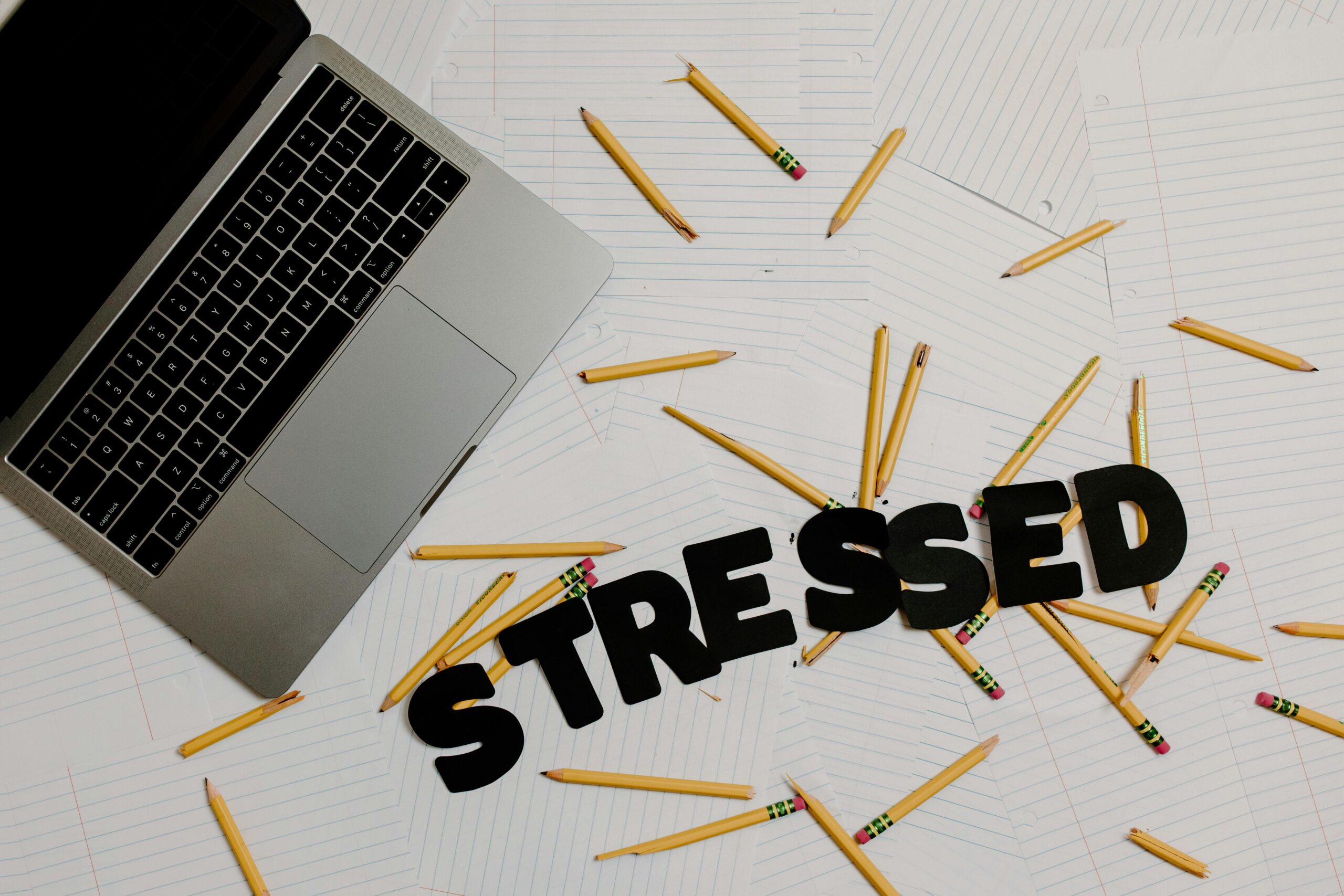
The moment you start wondering, “Is this ADHD… or am I just exhausted?”
If you’ve been struggling to concentrate, losing your train of thought mid-sentence, forgetting why you walked into a room, or rereading the same paragraph again and again, it can feel frighteningly familiar to what people describe as ADHD. You might even start to wonder if you missed something earlier in life, because the symptoms feel real, persistent, and disruptive. And they are real. What often gets overlooked, though, is that chronic stress can create a very similar “symptom picture,” especially around focus and forgetfulness.
Here’s why that matters. When you label stress-driven cognitive overload as ADHD too quickly, you might miss the root cause that’s asking for care: ongoing pressure, emotional strain, poor sleep, unresolved anxiety, burnout, grief, or prolonged uncertainty. At the same time, if you assume everything is “just stress,” you might miss ADHD that has been quietly present for years, especially if you’ve relied on perfectionism or overworking to cope. Both experiences deserve compassion, and both benefit from understanding the difference.
Chronic stress doesn’t just make you feel tense. Over time, it can change how your brain prioritizes information, how your attention moves, and how your memory “stores” what you experience. Research and clinical guidance consistently show that attention, working memory, and executive functioning can become vulnerable when sleep suffers, pressure stays high, and your nervous system never truly gets a break. Sleep loss alone can impair attention and memory, which can easily feel like ADHD in daily life.
So if you’ve been feeling scattered, forgetful, and unlike yourself, you’re not broken. You’re not “lazy.” And you’re not imagining it. You may be living with a nervous system that has been doing its best to protect you for too long. In the sections ahead, we’ll explore how chronic stress can mimic ADHD symptoms, how professionals tell the difference, and what you can do—gently and practically—to regain clarity.
Chronic stress doesn’t just distract you; it reshapes your attention
In everyday language, we say stress “takes up space in our head.” Clinically and biologically, that description fits. When your brain senses ongoing threat—whether that threat is a looming deadline, financial pressure, relationship conflict, caregiving responsibilities, or nonstop uncertainty—it starts prioritizing survival. That survival mode changes what your attention does. Instead of calmly focusing on a single task, your mind scans for problems, prepares for the next demand, and tries to prevent mistakes. You end up splitting your attention across ten mental tabs, which makes it harder to stay with one thing at a time.
This is one reason stress can look like ADHD. You might notice you can’t sustain focus, you procrastinate, you bounce between tasks, and you struggle to finish what you start. However, what’s driving the pattern often isn’t a lifelong attention regulation difference—it’s a nervous system stuck in high alert. Even when you sit down to concentrate, your body may still feel braced, as if something urgent might happen. That internal “alarm” competes with your work.
Stress also tends to reduce cognitive flexibility. You might become more rigid, more forgetful, and more reactive, not because you lack ability, but because your brain has limited bandwidth. Over time, chronic stress can disrupt executive processes supported by the prefrontal cortex—the region strongly tied to planning, attention control, decision-making, and working memory. A scientific review notes that stress can impair executive functions, especially when it becomes chronic, which can compromise adaptive behavior and daily functioning.
What makes this especially confusing is that you may still have moments of sharp focus. You might “zone in” during a crisis, or hyperfocus late at night, or power through when adrenaline kicks in. Then, when the urgency fades, your focus collapses. That up-and-down pattern doesn’t mean you’re faking it. It often signals a stress physiology that can sprint, but struggles to pace itself.
The brain on stress: why working memory and organization start to slip
Working memory is the mental sticky note that lets you hold information in mind while you use it. It’s how you remember a phone number long enough to dial it, track what someone just said while you respond, or keep the steps of a task in your head without constantly restarting. When working memory weakens, life feels messy. You lose track of what you were doing, forget what you just read, and misplace items more often. You can also feel disorganized even when you’re trying very hard.
Chronic stress can strain working memory because the brain diverts resources toward threat detection and emotional regulation. Instead of having enough “mental RAM” for planning and follow-through, your system spends that energy managing worry, urgency, and internal tension. As a result, your to-do list grows while your sense of control shrinks. Importantly, that experience can resemble ADHD’s executive functioning challenges, especially the inattentive presentation.
Research literature highlights that stress affects the prefrontal cortex, a key hub for executive function, and that chronic stress can alter neurochemical pathways that support optimal executive performance. The practical takeaway is simple but powerful: your focus and organization can decline even when your intelligence, values, and motivation stay exactly the same. That gap between “I care” and “I can’t execute” often triggers shame, which then increases stress, which then worsens cognition. It becomes a loop.
Stress can also erode prospective memory, which is the ability to remember to do something later. You might forget appointments, delay messages, and miss small steps that used to feel automatic. In real life, that can look like irresponsibility. In reality, it’s often cognitive overload.
If you’ve started compensating by overchecking, perfectionism, or staying late just to keep up, you’re not alone. Many people build elaborate coping systems when their executive functioning dips. Those systems work for a while, but they can also deepen burnout. The more you rely on force, the less you rely on restoration—and the brain eventually demands rest one way or another.
Forgetfulness under stress: it’s not just “bad memory,” it’s attention under pressure
A surprising truth about forgetfulness is that it often begins with attention, not memory. If your brain never fully registers something—because you were rushing, worried, multitasking, or emotionally flooded—then it can’t store that information well. Later, it feels like memory failure, but the problem started earlier: your attention got pulled away at the moment of encoding.
Chronic stress makes that more likely. You might notice you forget names, misplace keys, or struggle to recall what you just did. You may also feel “foggy,” like you’re present but not fully there. This can happen because stress increases mental noise. Your mind replays conversations, anticipates future tasks, and tries to solve problems while you’re doing something else. That constant internal chatter steals the quiet attention your brain needs to lay down memory.
Sleep also plays a huge role here. When stress disrupts sleep—either through trouble falling asleep, waking frequently, or waking unrefreshed—memory and attention suffer. Sleep loss has well-documented impacts on cognitive performance, including thinking, memory, and attention. If you’ve been feeling more forgetful lately, it may not be a permanent change. It may be a sleep-debt signal that your brain is carrying.
This matters because ADHD-related forgetfulness often has a different storyline. ADHD typically involves a long-term pattern of inattentiveness and executive functioning challenges across multiple settings, not just during one intense season of life. By contrast, stress-related forgetfulness often rises and falls with load. When pressure eases, cognition often improves. That doesn’t mean stress is “less serious.” It means the mechanism can be more state-based, and therefore more responsive to supportive changes.
So if your forgetfulness started after a job change, caregiving shift, major loss, health stress, or prolonged anxiety, your brain may be reacting to strain rather than revealing a lifelong neurodevelopmental profile. Both deserve care, and the distinction helps you choose the right care.
Why stress can create restlessness, impatience, and emotional reactivity
When people think of ADHD, they often picture restlessness, impulsivity, or emotional reactivity. Yet chronic stress can produce these too, especially when you spend months in survival mode. Under stress, your nervous system becomes more reactive. Small frustrations feel bigger. Interruptions feel unbearable. Waiting feels like torture, not because you lack character, but because your stress system stays activated and your tolerance window narrows.
This overlap can be especially confusing for adults. You might not pace the room or fidget constantly, but you may feel internally restless—like your mind can’t settle. You may also snap more quickly, cry more easily, or feel guilt afterward because you “should” have handled it better. In reality, chronic stress can reduce emotional regulation capacity, particularly when sleep and recovery are scarce. Sleep deprivation can worsen mood and destabilize attention and executive control, which then increases irritability and reactivity.
ADHD can include emotional dysregulation too, even though diagnostic criteria emphasize attention and hyperactivity/impulsivity. However, stress-driven reactivity often improves when you restore safety and recovery. You might notice that on vacation, after a full night of sleep, or during a calm week, you feel like yourself again. That pattern is a clue.
Another layer is the way stress changes time perception. When you feel overwhelmed, everything feels urgent, and your brain treats every demand like an emergency. That “rush” can lead to impulsive decisions, abrupt responses, and difficulty pausing. It can also create the classic experience of, “I know what I should do, but I can’t slow down enough to do it.” Again, that can resemble ADHD, but the root is often chronic activation rather than a stable trait.
If you’re seeing this in yourself, try holding the interpretation gently. Instead of asking, “What’s wrong with me?” you can ask, “What has my nervous system been carrying that it hasn’t been able to set down?” That question tends to open doors rather than close them.
Sleep loss and burnout: the silent amplifiers that make everything feel like ADHD
Chronic stress rarely travels alone. It often brings sleep disruption and burnout along with it. And when those join the picture, focus and memory can decline dramatically—sometimes fast enough to feel alarming. If you’ve been telling yourself you’re fine because you’re still functioning, burnout can quietly undermine cognition until you can’t ignore it anymore.
Sleep deprivation affects cognitive domains that matter for daily life: attention, working memory, and executive attention. That means even if you’ve never struggled with distractibility before, you might suddenly feel scattered, slow, and forgetful. You may find yourself making careless mistakes, losing words mid-thought, or rereading messages before you send them because you don’t trust your brain. Importantly, this can happen even when you still “look okay” from the outside.
Burnout adds another layer. Burnout often includes mental exhaustion, reduced efficiency, and a sense of cognitive dullness. People describe it as brain fog, emotional flatness, and reduced ability to concentrate. While popular articles vary in quality, clinical conversations consistently recognize cognitive symptoms as part of prolonged stress and exhaustion, and reputable sleep and occupational health guidance aligns with this general pattern.
This is where many people start Googling ADHD. They notice they can’t focus, they can’t organize, and they feel restless. Yet when you trace the timeline, the shift began after months or years of sustained pressure. In those cases, the most effective first intervention often involves restoring basics: sleep, recovery time, nervous system regulation, and realistic workload boundaries. When those improve, cognitive symptoms often soften.
That doesn’t erase the possibility of ADHD. Instead, it highlights something hopeful: if stress and sleep drive the symptoms, you can often reclaim clarity with the right support. Your brain may not need more self-discipline. It may need more safety and rest.
Stress vs ADHD: what clinicians look for when symptoms overlap
When attention problems show up, professionals try to understand the pattern across time, settings, and development. ADHD is a neurodevelopmental condition with diagnostic criteria that include persistent symptoms of inattention and/or hyperactivity-impulsivity that interfere with functioning. Diagnostic frameworks also emphasize duration, level of impairment, and the presence of symptoms in multiple settings.
One of the biggest differentiators is the timeline. With ADHD, symptoms typically begin in childhood, even if someone didn’t get diagnosed until adulthood. That childhood history doesn’t always look like “classic hyperactivity.” Sometimes it looks like daydreaming, chronic disorganization, unfinished homework, frequent forgetfulness, or strong intelligence paired with inconsistent performance. On the other hand, stress-related attention problems often start later, especially following a major life change or prolonged overload. The person can often point to a “before” and “after.”
Clinicians also explore context. Stress-related inattention often fluctuates. It intensifies during high-demand periods and eases when life calms down. ADHD symptoms tend to show up across contexts, even during calm periods, although they may become more noticeable under stress. This is why assessment looks at multiple life domains: work, home, relationships, and daily self-management.
Another key factor is what improves symptoms. If sleep restoration, workload changes, and anxiety treatment dramatically improve focus, stress likely played a primary role. If symptoms persist despite improved sleep and reduced stress, ADHD becomes more likely, especially if the person reports longstanding patterns.
Finally, professionals consider other contributors that can mimic ADHD symptoms, including anxiety, depression, trauma responses, sleep disorders, and certain medical conditions. This isn’t about ruling you out; it’s about ruling things in thoughtfully. A careful assessment doesn’t invalidate your experience. It honors it by taking it seriously.
A gentle way to reflect on your own pattern without self-diagnosing
It’s tempting to search for one definitive answer: “Do I have ADHD or not?” Yet the kinder approach often starts with curiosity. You can reflect on your pattern while holding space for complexity. Many people live in the overlap where stress intensifies traits they’ve always had, or where ADHD makes stress harder to manage, which then worsens cognition. Instead of forcing certainty immediately, you can gather clues.
Start with the timeline in your own story. First, if focus and forgetfulness surged during a season of chronic stress, your nervous system might be signaling overload. Next, notice what else changed around the same time. For example, did you start sleeping less? Or did responsibilities multiply? Maybe you lost support. Alternatively, you experienced ongoing uncertainty. In many cases, chronic stress pairs with a constant sense of mental urgency, even when you try to rest.
Next, pay attention to variability. Do you have days where you feel unusually clear and organized, especially after rest, exercise, or time away? Stress-based symptoms often fluctuate with recovery. ADHD-based symptoms can fluctuate too, but they often feel more trait-like, showing up across many types of days.
Also notice what kind of tasks trigger difficulty. Stress-driven attention problems often worsen with emotionally loaded tasks, high-stakes decisions, or situations that evoke fear of failure. ADHD often shows stronger challenges with tasks that require sustained effort without immediate reward, even when the task isn’t emotionally threatening. That difference isn’t absolute, but it can help.
Most importantly, practice self-compassion while you observe. If you use shame as a motivator, you will likely increase stress and worsen symptoms. If you use kindness and structure, you create the conditions where your brain can function again. Even before you get clarity on diagnosis, you can begin supporting your nervous system, which helps either way.
Therapeutic steps that help stress-driven “ADHD-like” symptoms soften
If chronic stress drives your focus and memory struggles, the most effective changes often look less dramatic than you expect. They tend to work because they restore capacity rather than forcing performance. In therapeutic terms, you reduce activation and increase regulation. In practical terms, you help your brain feel safe enough to focus.
Sleep often becomes the first lever, because sleep supports attention, memory, and emotional regulation. When sleep improves, cognitive fog often lifts. Sleep guidance also emphasizes that sleep loss can impair thinking, memory, and attention, which means sleep isn’t a luxury—it’s part of treatment.
Next, you can work with your nervous system directly. Slow breathing, grounding, and body-based regulation help shift you from threat mode into a calmer state where executive functioning becomes more accessible. This is not about “relaxing more” as a vague instruction. It’s about training your physiology to come down from chronic alertness so your prefrontal cortex can do its job.
You can also reduce cognitive load by simplifying decisions and creating external supports. When stress is high, your brain benefits from fewer choices and clearer routines. You aren’t becoming dependent; you’re being strategic. You can also practice single-tasking more often. Multitasking feels efficient, but it often increases errors and mental fatigue, especially under stress.
Therapy can help you identify the thought patterns that keep stress chronic, such as catastrophizing, perfectionism, people-pleasing, or self-criticism. As those soften, focus often improves because your mind stops running emergency simulations all day. Over time, you build a calmer internal environment, and attention becomes easier to sustain.
When ADHD and chronic stress coexist, clarity feels even harder—but hope gets bigger
Sometimes the answer isn’t either/or. ADHD and chronic stress frequently coexist, and they can amplify each other. If you have ADHD, daily life can demand more effort: planning, prioritizing, time management, task initiation, and emotional regulation can take more energy. That extra effort can create chronic stress, especially in environments that expect constant self-organization without support. Over time, the stress can worsen ADHD symptoms, and then the symptoms increase stress. It becomes a feedback loop.
This is also why adults sometimes seek evaluation during burnout. They may have managed for years through grit, intelligence, or anxiety-driven overcompensation. Eventually, life becomes too full—work, parenting, caregiving, or health challenges—and the coping system collapses. At that moment, ADHD traits become harder to mask, and stress adds a new layer of cognitive fog.
Clinical criteria for ADHD focus on persistent patterns that interfere with functioning, and public health guidance notes symptom thresholds and cross-setting impairment as part of diagnosis. If you suspect ADHD might be part of your story, you don’t need to prove it by suffering more. You can seek assessment and support now.
When both exist, integrated care helps. Stress regulation strategies still matter because they reduce amplification. ADHD supports still matter because they reduce daily friction. Together, they create momentum. You can learn skills, restructure environments, improve sleep, and explore therapy approaches that fit your nervous system. If medication becomes part of the plan for some people, professionals weigh it carefully within a broader treatment strategy.
The most therapeutic reframe here is that you aren’t failing at life. You may be living with an unseen load that finally became visible. When you name the load accurately, you can support it accurately.
Getting evaluated without fear: what a supportive assessment can look like
If your symptoms interfere with work, relationships, parenting, or basic self-care, it’s reasonable to seek professional support. An assessment doesn’t label you as broken. It gives you language, options, and a plan. Many people feel nervous because they worry they won’t be taken seriously, or they worry they’ll be told it’s “just stress.” A good clinician will take your distress seriously either way, because both stress and ADHD can significantly impact functioning.
A supportive evaluation often includes a detailed history, including childhood patterns, school experiences, family observations, and current symptoms across settings. It also includes screening for sleep problems, anxiety, depression, trauma responses, and other contributors that can mimic ADHD-like symptoms. This aligns with public health diagnostic guidance emphasizing symptom patterns, duration, and impairment across contexts.
You can also prepare gently. Notice your patterns for a couple of weeks in a non-punitive way. Pay attention to sleep, workload, emotional triggers, and the environments where focus improves or worsens. Not because you need perfect data, but because it helps you tell your story clearly.
If you fear being dismissed, consider seeking a clinician who understands both trauma-informed care and adult ADHD. The overlap matters. A therapist or clinician who knows how stress shapes attention will ask better questions. They will also help you build supports immediately, rather than waiting for a definitive label before offering relief.
Most importantly, remember this: you deserve support because you’re struggling, not because your struggle meets someone’s idea of “severe enough.” Whether the root is chronic stress, ADHD, or both, help can make your life feel more workable again.
A warm closing: you’re not losing yourself—you’re learning what your brain needs
When chronic stress mimics ADHD symptoms, it can feel like your mind has changed overnight. You might mourn the version of you that felt sharper, more organized, and more consistent. Yet your brain likely hasn’t betrayed you. It has adapted. Under prolonged stress, your mind shifts into survival priorities, and focus becomes harder not because you lack willpower, but because your system tries to keep you safe.
That’s why the path forward usually begins with compassion and accuracy. You can validate the symptoms without rushing to self-diagnose. You can also seek professional clarity without fearing what you might find. ADHD is not a character flaw, and stress is not a personal failure. They are both human experiences that deserve care.
As you move forward, try to measure progress in kinder ways. For instance, notice when you feel slightly more present. Also, notice when you remember small things again. And notice when you recover faster after a tough day. Taken together, these are signs that your nervous system is responding. Over time, with better rest, supportive structure, and therapeutic tools, many people regain clarity and confidence.
And if it turns out ADHD is part of your story, that knowledge can feel deeply relieving. It can help you stop blaming yourself and start building a life that fits your brain. Either way, you don’t have to keep pushing through fog alone. Your mind can feel steadier again, and you can get there in a way that feels gentle, supportive, and truly sustainable.
If you want, tell me your target audience (teens, college students, working professionals, parents, or general), and I can adapt the same blog to match your ideal reader while keeping the 3500+ word and Yoast-friendly structure.